The Man Who Gave Us Penthouses: The Wild Story of Elisha Otis
Next time you step into an elevator, press floor 30, and scroll on your phone without a second thought, take a moment to thank a 19th-century tinkerer named Elisha Graves Otis.
Before Otis came along, riding a platform up a building was essentially a game of industrial roulette. At Olympic Elevator, we live and breathe reliable lift technology, but the story of how it all started involves a bold stuntman moment that changed city skylines forever.
From Vermont Farm Boy to Chief Serial Tinkerer
Born in 1811 on a farm in Halifax, Vermont, Elisha was the youngest of six kids. He had a brilliant mechanical mind, but his career trajectory was a bit all over the map due to chronic health issues. He built grain mills, designed carriages, and worked as a master mechanic in bedstead factories.
Otis was not trying to invent skyscrapers. He was just trying to solve an annoying workplace hazard. In 1852, while managing a bedstead factory in Yonkers, New York, he needed a way to haul heavy equipment up to the upper floors without risking his crew's lives.
Hoists and platforms had existed since ancient Rome, but they had one terrifying flaw. If the rope snapped, down you went.
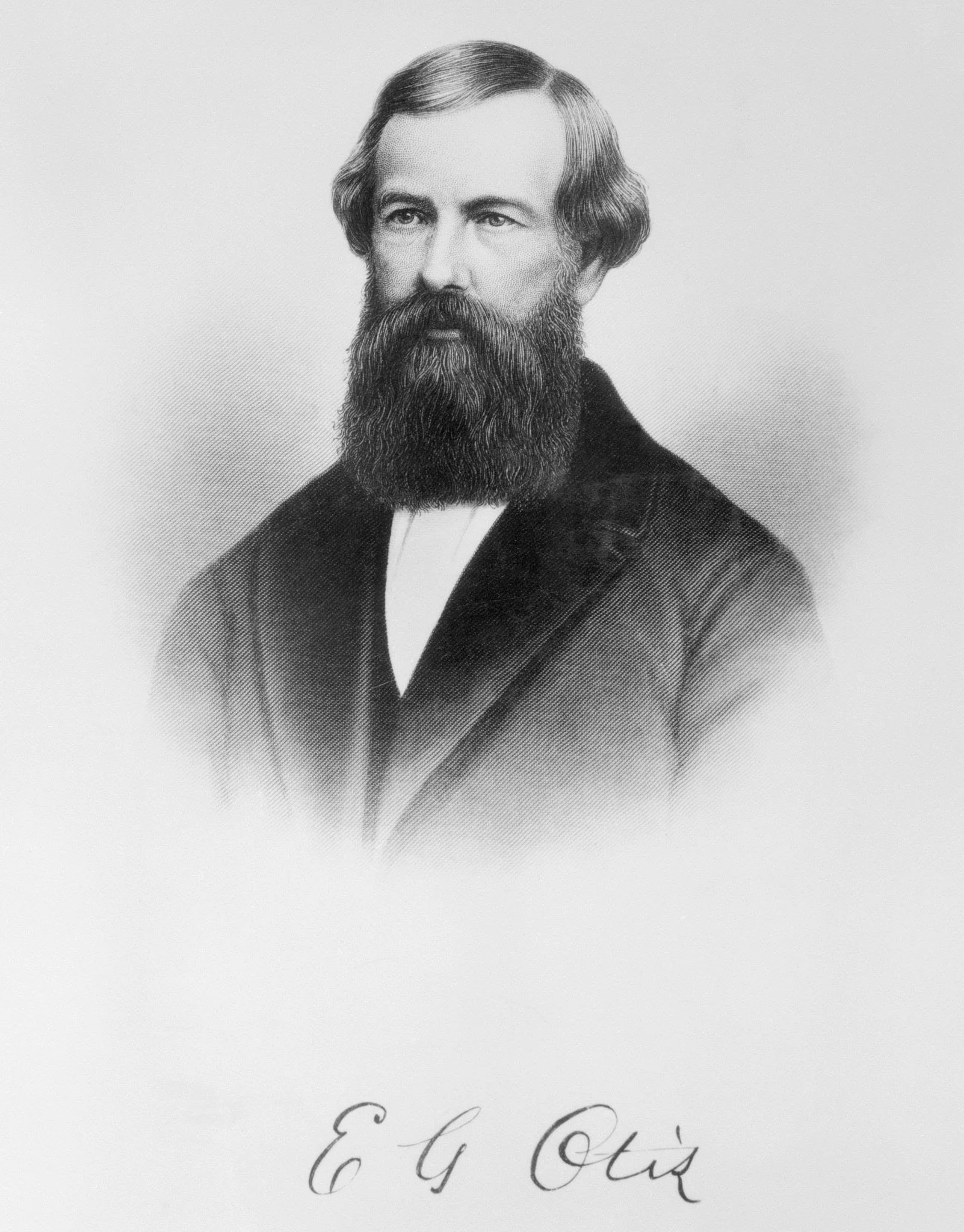
Elisha Otis (1811 to 1861), the father of vertical transportation.. Source: Bettmann / Bettmann Archive
The Ingenious Invention That Kept Things Hanging
Otis came up with a simple yet brilliant mechanism: a tough leaf-spring attached to the top of the elevator platform.
Under tension: The weight of the platform pulled the spring tight so it could move up and down freely.
If the rope snapped: The tension vanished instantly, causing the spring to snap outward and catch into notched wooden guide rails on the sides of the shaft.
Instead of plunging into the basement, the platform locked firmly in place. It was a genius fix, but when Otis tried to sell it, the public responded with a giant collective shrug. Orders were not coming in. So, Otis decided to go full showman.
The Ultimate 1850s Stunt: Cutting the Rope
In 1854, at the Exhibition of the Industry of All Nations at the New York Crystal Palace, Otis staged a demonstration that belonged in an action movie.
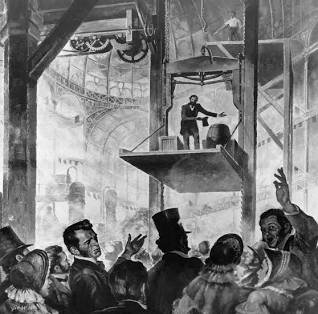
Otis staging his dramatic safety elevator demonstration.. Source: Wikimedia Commons
He rode an open platform loaded with heavy crates far above a gasping crowd. Once he reached a terrifying height, he instructed his assistant to take an axe and chop the main hoisting rope.
The rope snapped with a loud crack. The crowd screamed. But instead of crashing down to the floor, the platform dropped only a few inches before his safety spring engaged, locking the lift in mid-air. Otis tipped his top hat to the stunned audience and uttered his iconic line:
“All safe, gentlemen! All safe!”
Flip the Real Estate Market Upside Down
Before Otis proved elevators were safe, top floors were the cheap seats. Nobodies and servants walked up five flights of stairs, while the wealthy stayed on the ground floor to avoid the trek.
The safety elevator turned real estate upside down. Suddenly, high floors had the best light, the cleanest air, and the greatest views. The penthouse was born, and cities began growing straight into the clouds instead of sprawling endlessly outward.
Carrying the Torch at Olympic Elevator
Elisha Otis proved that grand architecture starts with absolute safety.
At Olympic Elevator, we carry that exact same spirit into every project. Whether we are installing brand-new systems, modernizing classic cabs, or performing routine maintenance, our goal is simple: deliver smooth, reliable, and totally worry-free rides every single day.
Got a building that needs a lift boost? Contact the team at Olympic Elevator today!